
Understand Key Factors for a Pickup Fire Skid Build
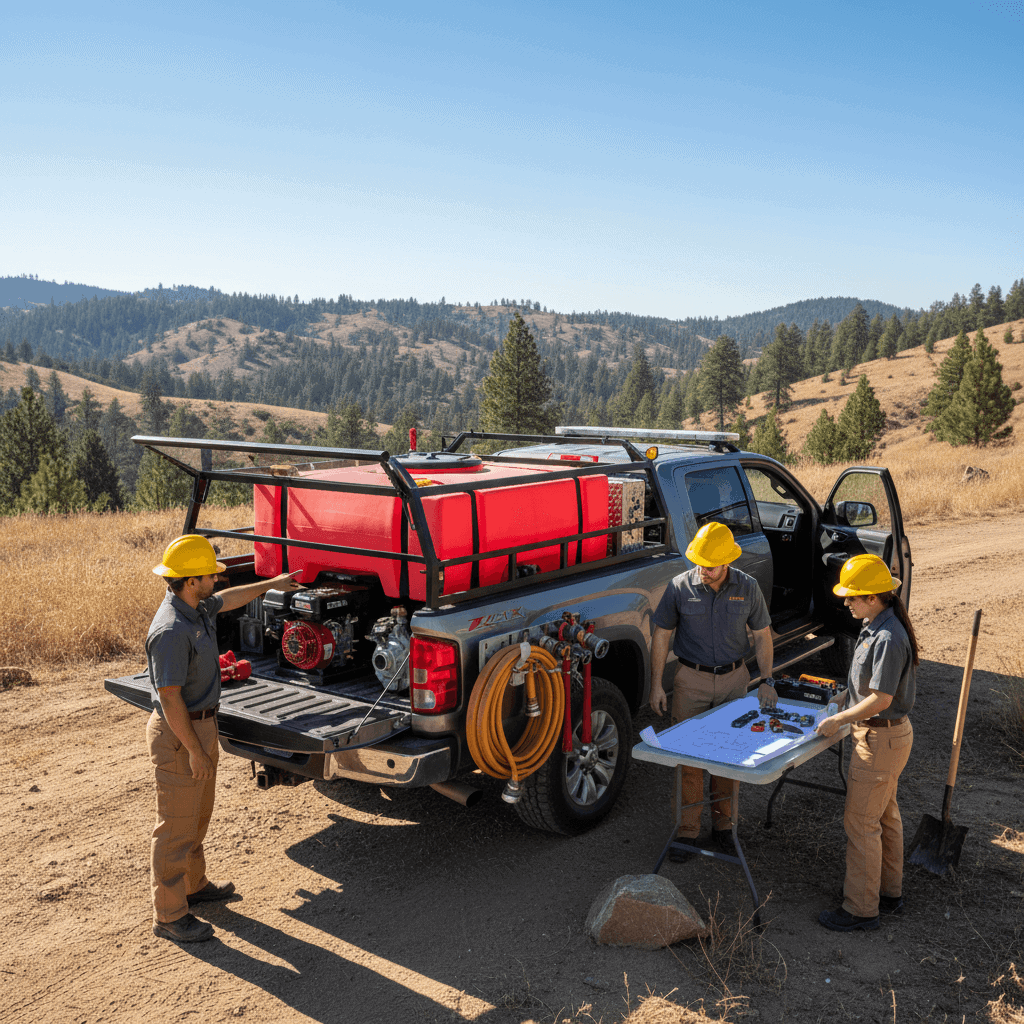
Building a fire skid for your pickup truck can be a really smart move especially if you own rural property or volunteer with a fire department. This specialized equipment turns a standard truck into a vital tool for fire suppression. It provides quick response capabilities when every second counts.
I have seen firsthand how a well-designed fire skid makes a difference in remote areas. It can mean the difference between a small incident and a widespread disaster. Having water and a pump ready on your truck offers immense peace of mind and practical readiness.
This article will help you understand key factors for a pickup fire skid build. We will explore everything from assessing your truck’s limits to choosing the right components. A successful build requires careful planning and attention to detail so let us get started.
Assessing Your Needs and Truck Capabilities
Before you even think about buying components for a fire skid, you must thoroughly evaluate your specific needs and the capabilities of your pickup truck. This initial assessment is critical because it dictates every other decision you will make. It ensures your final build is both effective and safe.
Consider the primary purpose of your fire skid. Are you protecting personal property a ranch or a large estate. Maybe you are a volunteer firefighter needing a quick attack unit. The demands of these different uses vary greatly. A personal property skid might need a smaller water tank and a simpler pump. A volunteer fire unit probably requires more capacity and professional-grade equipment. Understanding your role helps define the scope of the project.
Your truck’s specifications are the next big consideration. The size and payload capacity of your pickup truck are the absolute limiting factors. You cannot just put any size skid onto any truck. Overloading a vehicle is not only illegal in many places it is also extremely dangerous. It impacts braking steering and stability making your truck unsafe to drive.
Matching Skid Size to Truck Specifications
I always recommend starting with your truck’s gross vehicle weight rating or GVWR. This number tells you the maximum allowable weight of your fully loaded truck including the vehicle itself passengers fuel and all cargo. You must know this number. Your fire skid and its contents must fit within this limit.
Calculate the estimated weight of your proposed skid. This includes the water tank, the water itself, the pump, hoses, nozzles, and any other tools you plan to carry. Water is heavy so a 100-gallon tank adds over 800 pounds just for the water. Add the weight of the tank and equipment and you quickly see how much capacity you need.
Many common half-ton pickups might only safely carry a 100 to 150-gallon skid. Heavy-duty three-quarter-ton or one-ton trucks can handle larger tanks perhaps up to 300 or 400 gallons. Always err on the side of caution. It is better to have a slightly smaller, safe setup than an overloaded, unstable one. Think about how the weight will be distributed across your axles. Improper weight balance can reduce traction and make handling difficult.
Water Storage and Delivery Systems
The core of any pickup fire skid is its water storage and delivery system. This includes the tank that holds the water and the pump that moves it through the hoses. Choosing the right components here is paramount for effective fire suppression. There are various options each with its own advantages and disadvantages.
Water tanks are typically made from polypropylene, steel, or aluminum. Poly tanks are very popular because they are lightweight corrosion-resistant and often more affordable. They can withstand impacts without denting or rusting. Steel tanks offer extreme durability and can be custom fabricated but they are much heavier and prone to rust if not properly coated. Aluminum tanks are lighter than steel but usually more expensive to fabricate. I have seen poly tanks perform well in many applications but for extreme duty, some prefer steel.
The shape of your tank also matters for stability. Many skids use baffled tanks to prevent water from sloshing around too much. This movement of water called surge can severely affect your truck’s handling when driving especially with a partially full tank. Baffles help to minimize this effect maintaining better control of your vehicle. A lower profile tank also helps keep the center of gravity down. This improves stability on uneven terrain.
Choosing the Right Pump for Your Needs
Selecting the right pump is another critical step. Fire skids typically use either centrifugal pumps or positive displacement pumps. Centrifugal pumps are good for high flow rates and are less prone to damage from small particles in the water. They are excellent for quickly putting a lot of water on a fire from a close distance. Positive displacement pumps like piston or diaphragm pumps are better for high pressure and longer distances. They can create a fine mist for protection or a powerful stream to reach higher areas.
When selecting a pump you need to consider the balance between flow rate measured in gallons per minute or GPM and pressure measured in pounds per square inch or PSI. A higher GPM means more water volume. High PSI means the water travels further and hits harder. Many smaller fire skids find a good balance with pumps offering around 70-100 GPM at 70-100 PSI. This delivers enough volume and pressure for most spot fires and defensive actions.
The pump engine type is also a factor. Most portable fire pumps run on gasoline. Diesel engines are an option if you prefer to match your truck’s fuel type simplifying fuel storage. Electric pumps exist but usually require a substantial battery bank for sustained operation. Always consider the ease of starting and maintenance for your chosen pump system. You want it to be reliable every single time you need it.
Frame Construction and Mounting
The frame of your fire skid is the backbone of the entire system. A robust and well-designed frame ensures that all components are held securely. It also transfers the weight evenly to your pickup truck’s bed. I cannot stress enough how important structural integrity is for safety and functionality.
Common materials for fire skid frames include steel and aluminum. Steel frames are very strong and durable. They are usually welded together providing a rigid and long-lasting structure. However steel is heavy. Aluminum frames offer a significant weight advantage. This is a big plus for maximizing your truck’s payload capacity. Aluminum requires specialized welding techniques and is often more expensive to fabricate. For most applications a strong steel frame built by a professional welder is a solid choice.
The method of mounting the skid to your truck bed is equally important. The skid must be securely fastened to prevent any movement during transit or operation. Using heavy-duty bolts through the truck bed into reinforced points on the frame is the most common and secure method. Some custom builds incorporate quick-release systems but these must be engineered with extreme care to ensure safety. Anti-vibration pads between the skid frame and the truck bed can help reduce wear and tear on both the truck and the skid components. This also helps prolong the life of your equipment.
Ensuring Stability and Safety During Operation
A properly mounted fire skid contributes significantly to the overall stability and safety of your vehicle. When you are driving a truck with a heavy load especially a liquid one like water, any shift in that load can be dangerous. A securely bolted frame prevents the skid from sliding or shifting. This maintains your truck’s balance even during sharp turns or sudden stops.
I always consider the center of gravity. A lower center of gravity is always better for stability. This is why many fire skids are designed with tanks that sit low in the truck bed. If the weight is too high your truck becomes more prone to rolling over on uneven terrain or during aggressive maneuvers. Take your time during the design phase to prioritize a low and balanced weight distribution. This means placing heavier components like the pump and engine as low as possible and centered.
Beyond permanent mounting, proper tie-down procedures are essential. Even with a bolted frame, I recommend using additional heavy-duty ratchet straps to secure the skid. These straps provide an extra layer of security. They also help distribute forces across multiple points. Always inspect your mounting hardware and straps before each use. Make sure everything is tight and free from damage. Safety should always be your top priority when operating a specialized vehicle like a fire skid truck.
Essential Components and Accessories
Beyond the fundamental tank and pump, a functional fire skid build requires several essential components and accessories. These items ensure efficient operation and worker safety. Neglecting these smaller but crucial details can compromise the effectiveness of your entire system. This is where I find people often overlook key aspects.
Hoses are obviously critical. You will need both suction hose and discharge hose. Suction hose is typically a larger diameter reinforced hose used to draw water from a source like a pond or auxiliary tank. Discharge hoses come in various lengths and diameters based on your needs. Standard fire hose is common for its durability. Nozzles are also important because different situations require different spray patterns. A combination nozzle allows you to switch between a straight stream for distance and a fog pattern for wider coverage or personnel protection. Consider having a few different nozzles for versatility.
Storage solutions for tools and equipment are also key. You need a place for wrenches spare parts extra fuel containers and safety gear. Custom-built compartments on the skid itself or secure toolboxes mounted in the truck bed are good options. Keep these items easily accessible but also secure so they do not become projectiles during transport. Always think about what you will need in an emergency. Make sure it is there and easy to grab.
Powering Your Skid and Communications
Many fire skids incorporate electrical components. This could be for an electric start on your pump engine, auxiliary lighting for night operations, or even for charging communication devices. A dedicated deep-cycle battery on the skid ensures power independence from your truck’s main battery. This prevents draining your starting battery during extended operations. Include a way to charge this battery such as a solar panel or a charging port that connects to your truck’s electrical system when the engine is running.
Communication is vital during any emergency. Having reliable two-way radios is a non-negotiable accessory. This allows you to coordinate with others on scene or call for backup if needed. Cell service can be unreliable in remote areas so dedicated radios are essential. Think about ear protection as pump engines can be loud. Also include headlamps or flashlights for visibility. Personal protective equipment or PPE like gloves eye protection and fire-resistant clothing should also be stored with the skid. You need to be ready for anything.
Regulatory Compliance and Safety Standards
Building a pickup fire skid involves more than just assembling parts. You must also consider regulatory compliance and adhere to important safety standards. Ignoring these aspects can lead to legal issues or dangerous situations. I always emphasize doing your homework on this front.
Local and state regulations vary significantly. Some areas have specific requirements for vehicles equipped with fire suppression equipment. This might involve weight limits vehicle registration classifications or even specialized licensing. For instance a truck with a large water tank could push it into a commercial vehicle category. This comes with different rules for maintenance and operation. Always check with your local Department of Motor Vehicles and fire marshall’s office to understand all applicable laws.
Insurance implications are another factor. Inform your insurance provider about the modifications to your truck. A fire skid is a significant addition that changes the vehicle’s purpose and value. You want to make sure you have adequate coverage for both the truck and the specialized equipment. They might have specific requirements for how the skid is built or secured. Understanding these rules protects you in case of an accident or equipment damage. This type of specialized knowledge for a fire skid build knowledge is readily available from state and federal agencies.
Maintenance and Longevity of Your Skid
Once your pickup fire skid is built and operational, its longevity and reliability depend heavily on consistent maintenance. Proper care ensures that your equipment is always ready when you need it most. This also protects your investment over time. I consider regular checks to be a vital part of owning one of these units.
Regular maintenance should include checking all fluid levels in the pump engine. This means oil and fuel. You should also inspect spark plugs and air filters periodically. Test run the pump regularly perhaps once a month for a few minutes. This keeps the engine lubricated and ensures it starts reliably. Always check for leaks around the tank and pump connections. Even small leaks can become major problems. Rust prevention is crucial for any metal components, especially in areas with high humidity or exposure to the elements. Touch up paint or use rust-inhibiting sprays as needed.
Proper winterizing is essential if you live in a cold climate. Water left in the tank pump or hoses can freeze and cause extensive damage. Drain all water from the system after use, especially before freezing temperatures arrive. Run non-toxic antifreeze through the pump to protect internal components. Disconnect and remove batteries for storage in a warm place during the coldest months. This prevents them from losing charge or being damaged by extreme cold.
Pre-Deployment Checks and Best Practices
Before any potential deployment or even regular use, I perform a quick but thorough pre-check. This ensures everything is in optimal working order. First check your water level. Make sure the tank is full or at the desired level. Next visually inspect all hoses and nozzles for cracks fraying or blockages. Make sure all connections are tight. This includes suction and discharge lines.
Start the pump and confirm it primes and builds pressure correctly. Test the water flow through your nozzles. This confirms that there are no obstructions and that the spray patterns are correct. Check all mounting hardware to ensure the skid is still securely fastened to the truck bed. Tighten any loose bolts or straps. Confirm that all auxiliary equipment like tools and communication devices are present and functioning. A checklist is incredibly useful for these pre-deployment checks. It helps you ensure you do not miss any critical steps. These best practices will keep your fire skid reliable and ready for action for many years.
Building a Reliable Fire Skid for Pickup Trucks
Successfully undertaking a pickup fire skid build demands careful thought and meticulous planning from start to finish. I believe it is about more than just bolting parts together. It involves understanding your operational needs, respecting your truck’s physical limits, and selecting the right components for reliability. From choosing the correct water tank material to sizing your pump for optimal performance, every decision contributes to the overall effectiveness and safety of your unit. Always remember that a well-maintained fire skid can be an indispensable asset, providing peace of mind and crucial fire suppression capabilities when emergencies strike. Do not cut corners. Prioritize quality materials and professional installation where necessary. Take the time to understand your truck’s GVWR and weight distribution. This ensures safe handling and operation.
Consider the varying demands of your potential fire scenarios and choose components that match those needs. This includes tank size, pump type, and the array of hoses and nozzles you carry. Equipping your skid with essential accessories like communication devices and proper safety gear is equally important. These items are not mere afterthoughts. They are integral to successful and safe operations. Regularly performing maintenance and pre-deployment checks will extend the life of your equipment. It also guarantees readiness for immediate use. Your commitment to these steps will result in a robust and dependable fire skid. Start planning your build today and gain the confidence that comes with being prepared.


